
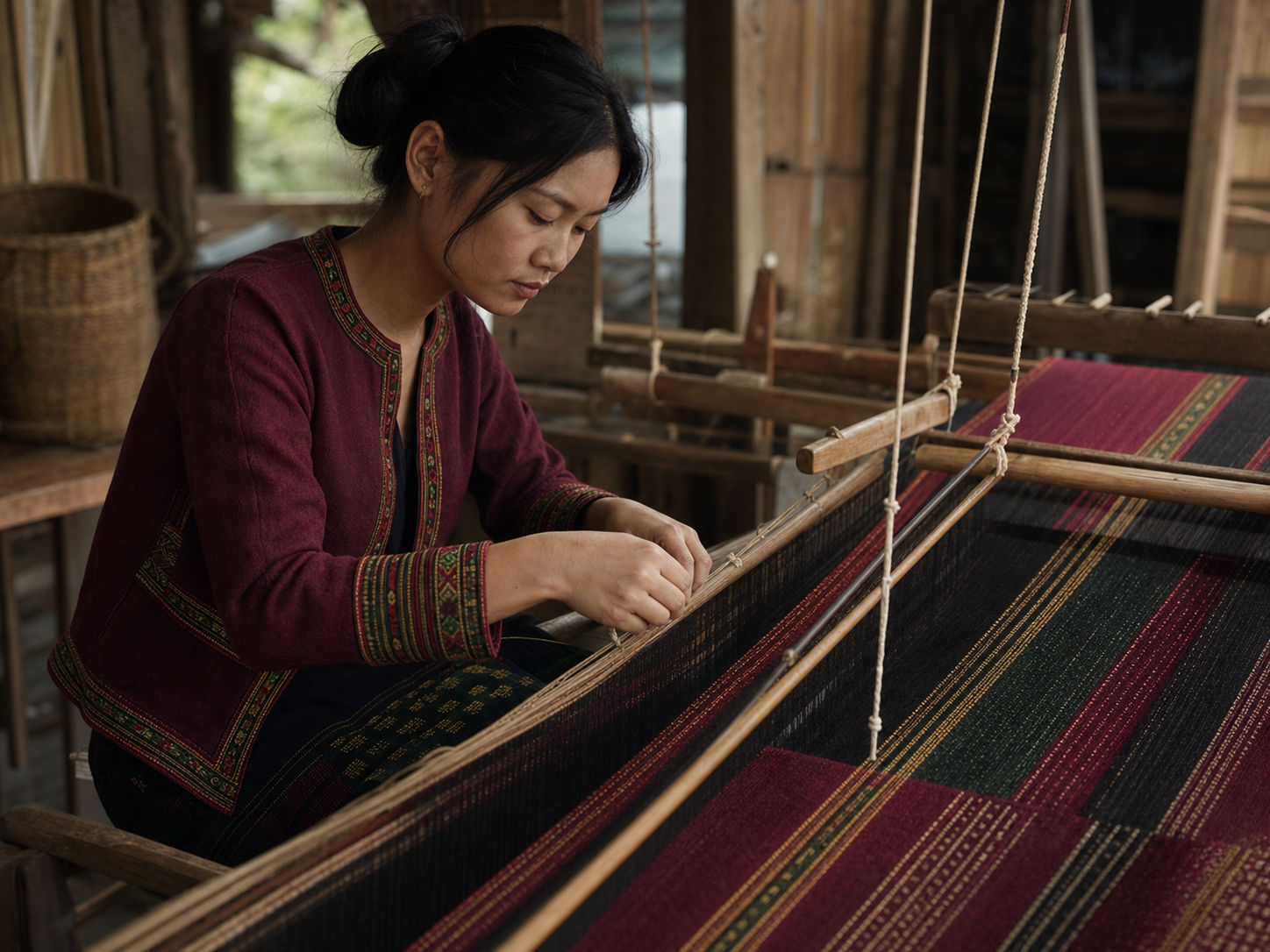
Every line begins
with a hand.
The anatomy of slow textile construction: how cotton, wool, bark dyes, and backstrap tension become living heritage cloth.
Highland Methodology
Four stages of sacred patience.
A single ceremonial Chin shawl requires up to 180 hours of focused labor. There are no computer algorithms or mechanical shortcuts in our atelier.
180+ Hours
Average creation time per ceremonial yardage panel.
100% Botanical
Wild mountain bark, madder roots, turmeric & indigo.
Zero Microplastics
Pure biodegradable highland fibers from hill farms.
Living Archive
Over 40 traditional diamond geometries preserved.
Botanical Color Formulation
We begin with raw, unmercerized cotton carded by hand in the Chin highlands. Color is extracted from seasonal wild ingredients: fermented indigo leaves for midnight blues, madder root for deep terracotta reds, and indigenous oak bark for signature Loom Black mordants.
- Harvested sustainably in the Chin pine forests
- Dye lots vary slightly, giving each piece unique soul
Loom Warping & Tension Geometry
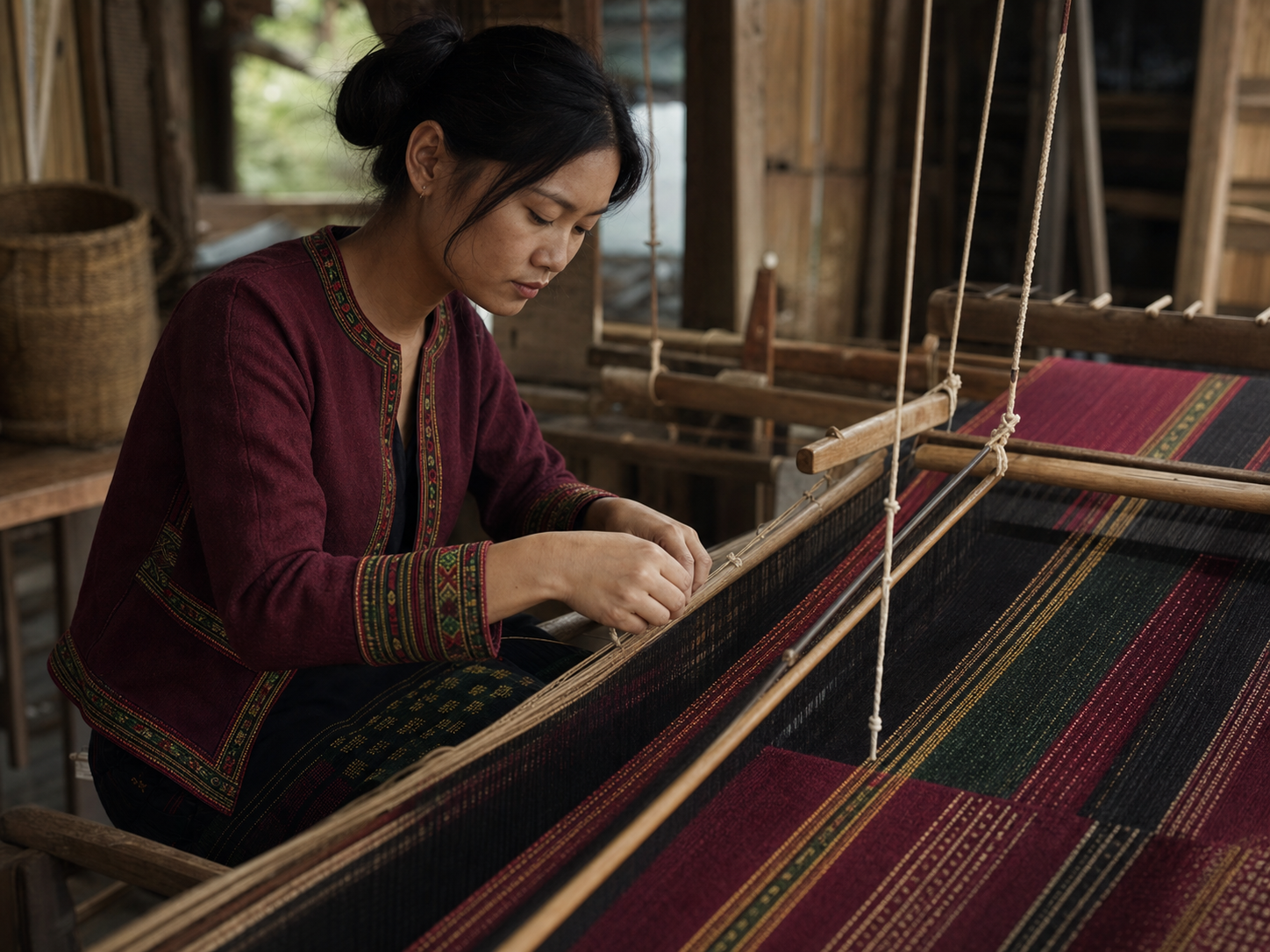
Setting the warp is a mathematical art. Hundreds of individual parallel threads are measured, wound across warping pegs, and threaded through string heddles. A single misaligned strand will distort the entire geometric diamond field weeks later.
- Calibrated for specific fabric weight and drape
- Double-warp structural reinforcement for lasting durability
Hand-Guided Shuttle Weaving
The weaver sits at the loom, controlling the shedding mechanism with foot treadles or a leather backstrap harness. The wooden shuttle glides back and forth, beaten firmly into place with a hardwood sword. The rhythm is steady, meditative, and unbroken.
- Motifs counted thread-by-thread from ancestral memory
- Continuous selvedge edge without raw cut threads

Tailoring & Archival Inspection
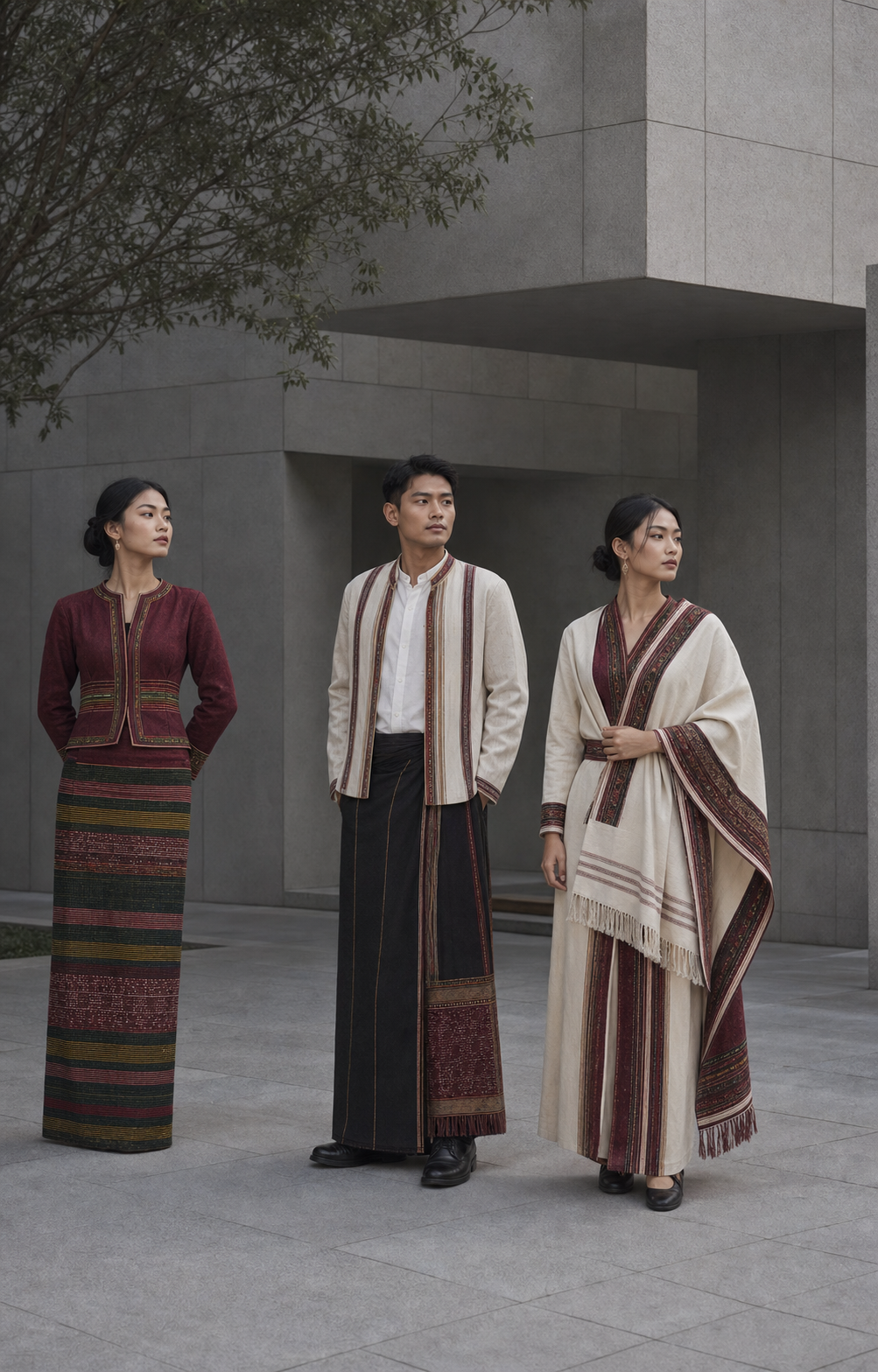
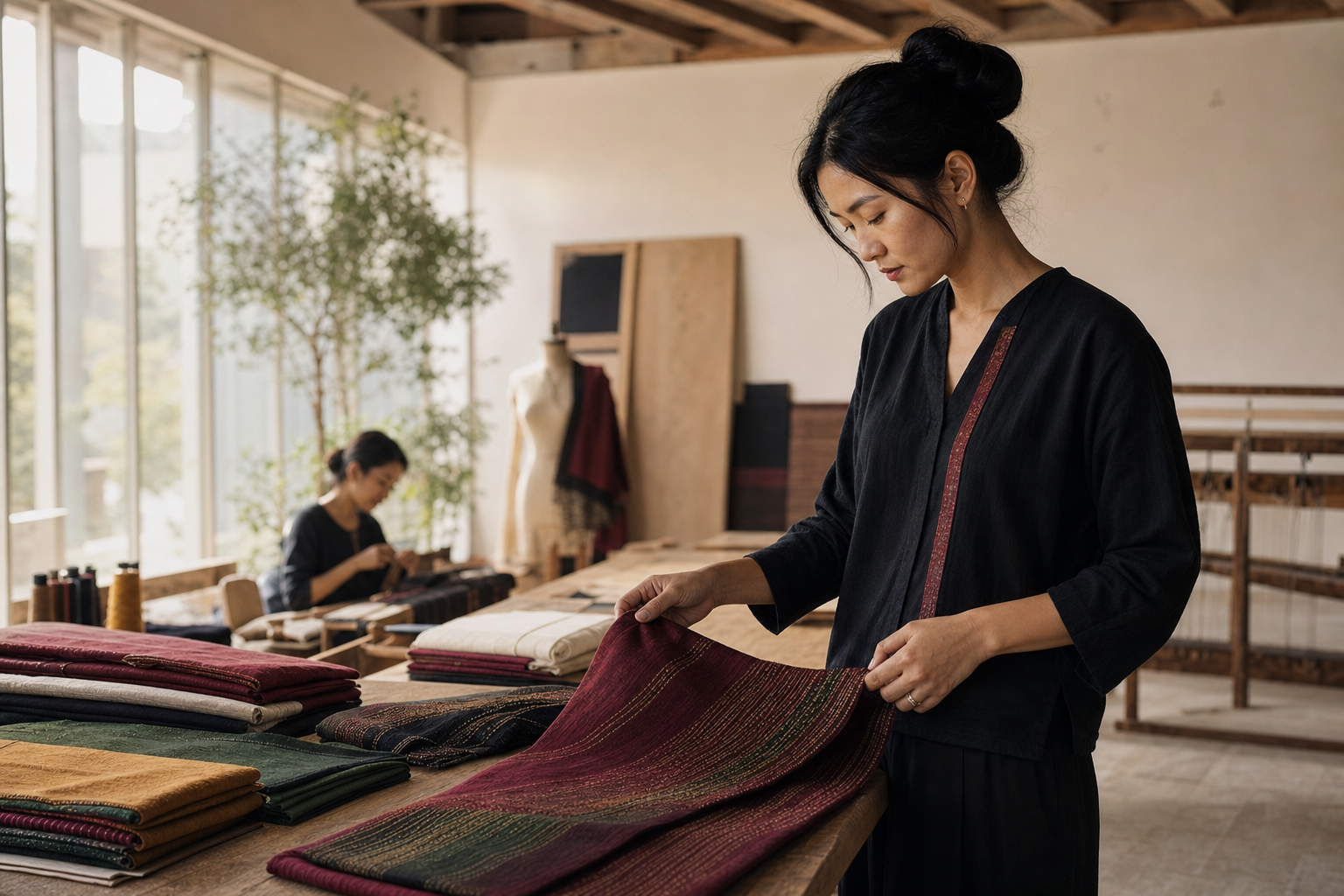
Once removed from the loom, the yardage is steamed, rested for 48 hours to settle fiber tension, and inspected by Master Weaver Salai Thang Chin. Garments like the Column Weave Skirt are then hand-tailored and lined with breathable cotton voile.
- Individually numbered linen provenance label attached
- Packaged in breathable unbleached cotton storage bag
Material Honesty
Fibers shaped by highland climate.
Preservation
How to care for handwoven textiles.
1. Gentle Cold Wash
Wash by hand in cool water with pH-neutral plant soap. Never wring or twist the cloth.
2. Dry Flat in Shade
Reshape while damp and lay flat on a towel away from direct sun to preserve botanical colors.
3. Low Steam Iron
Iron on reverse side using low heat and a damp pressing cloth over the geometric diamond bands.
4. Breathable Storage
Store folded in cotton bags with natural cedar blocks. Avoid plastic garment bags.
Letters from the Atelier
New collections.
Maker chronicles.
Woven heritage notes.
Receive rare dispatches on seasonal botanical harvests, limited backstrap loom runs, and cultural textile exhibitions in Myanmar and abroad.